Co-Parenting After Divorce Advice: Building a Team for Your Kids
Understanding the Foundations of Co-Parenting After Divorce

What is Co-Parenting?
Co parenting after divorce advice starts with understanding what co-parenting actually means. At its core, co-parenting is a legal or personal arrangement where separated or divorced parents work together to share the responsibilities, finances, guardianship, and custody of their children. You’re no longer life partners, but you remain parenting partners until your child turns 18 medium.com.
The fundamental purpose of co-parenting is simple yet profound: ensuring your children feel safe, supported, and loved regardless of which household they’re in. According to WVU Extension, co-parenting helps children deal with changes when parents are no longer together, and children need both parents to participate in their lives for better outcomes. It’s usually best for children if co-parenting arrangements keep both parents involved in a child’s life raisingchildren.net.au. For more guidance, see Co Parenting For Divorced Parents.
Why Co-Parenting Matters for Children
The stakes of successful co-parenting are high. Research shows that parental divorce and separation have been associated with an increase in child and adolescent adjustment problems, including academic difficulties like poor performance grades and higher dropout rates, disruptive behaviors, and increased risk for anxiety and depression. This is particularly true in families where conflict, aggression, and parental disputes remain high smartcouples.ifas.ufl.edu.
However, the research also offers hope. In positive co-parenting arrangements where children feel safe, stable, and supported, healthy co parenting has been shown to result in higher levels of self-esteem, improved academic performance, and better overall mental health for the children involved. Your children’s well-being depends largely on how you and your ex-partner navigate this new relationship.
The Shift from Spouses to Co-Parents
The transition from being a couple to becoming co-parents won’t happen overnight. When you and the other parent were together, your interactions as a couple and as parents were intertwined. After separation, you must intentionally form a new relationship focused exclusively on your children’s needs.
This psychological shift requires both parents to separate their feelings about each other from their feelings about their children. The goal isn’t to become friends again—it’s to become functional teammates. Think of it as a business partnership where the “business” is raising healthy, happy children. You don’t need to like your co-parent to work effectively with them medium.com. To meet everyone’s needs—with a focus on what’s best for your child—you might have to make compromises raisingchildren.net.au.
Core Practices for Effective Co-Parenting

Child-Centered Focus: Prioritize Your Children’s Needs
The most important co parenting tip you’ll ever receive is this: keep your children at the center of every decision. This means setting aside your personal feelings about your ex-partner and asking yourself, “What does my child need right now?”
Children generally do better when their routines are consistent and predictable, according to Raising Children Network. When you prioritize your children’s needs above your own hurt, anger, or frustration, you create an environment where they can thrive despite the family changes.
Ask yourself these questions before making any major decision:
- How will this affect my child’s sense of security?
- Does this support my child’s relationship with their other parent?
- Am I making this decision based on my emotions or my child’s best interests?
Consistent Rules and Routines Across Households
Children flourish with consistency. When rules, expectations, and routines differ dramatically between households, children often feel confused, anxious, or learn to manipulate the situation. While you don’t need identical households, aim for alignment on the big picture items.
Work together to establish consistent bedtimes, homework expectations, and limits on screen time. Discuss how you’ll handle discipline for common issues like talking back or breaking rules. When children know what to expect at both homes, they feel more secure and can focus on being kids rather than navigating two different worlds. Related reading: How To Create A Co Parenting Plan.
Consider creating a shared document outlining the key rules and routines. This doesn’t mean you can’t have different approaches—some variation is normal and acceptable. But major discrepancies in expectations can undermine your child’s sense of stability.
Professional and Business-Like Communication
Treating your co-parenting relationship like a business partnership transforms how you communicate. Pediatric psychologist Dr. Kathryn Jones notes that the key to co-parenting comes down to open communication, planning, and accountability, as reported by Cleveland Clinic. This is crucial for effective co parenting communication.
Business-like communication means:
- Keeping messages focused only on children’s needs.
- Responding within a reasonable timeframe.
- Avoiding emotional language or personal attacks.
- Using written communication (email, text, or co-parenting apps) for important matters.
- Keeping records of significant decisions and agreements.
When emotions run high, pause before responding. Ask yourself: “Would I send this message to a colleague?” If the answer is no, rewrite it. This approach protects your children from being caught in the middle of parental conflict and helps you maintain focus on solutions rather than blame medium.com.
Establishing and Respecting Boundaries
Clear boundaries protect everyone in a co-parenting relationship. These boundaries include how and when you communicate, what personal information you share, and how you handle transitions between households.
Some practical boundaries to consider:
- Establish specific times for non-urgent communication.
- Keep personal information limited to what affects your children.
- Create clear protocols for schedule changes.
- Respect each other’s time with the children.
The Government of Canada’s justice department recommends keeping meetings relatively formal—held in neutral locations at specific times with a prepared list of issues to discuss. This structure helps prevent conversations from veering into personal territory or reopening old wounds.
Navigating Common Co-Parenting Challenges and Solutions

Conflict Resolution Strategies
Conflict is inevitable in any co-parenting relationship. What matters is how you handle it. When you and your co-parent can sort out disagreements in calm, consistent, and respectful ways, it can be very reassuring for your child, according to Raising Children Network. In fact, watching parents resolve conflicts constructively can help children learn valuable relationship skills like managing emotions, negotiating, and solving problems effectively. Addressing these co parenting challenges head-on is vital.
Try these conflict resolution techniques:
The 24-hour rule: When a conflict arises, wait 24 hours before addressing it unless it’s urgent. This cooling-off period prevents reactive, emotional responses. You might also like Child-Friendly Co-Parenting Tips: Nurturing Stability.
Focus on interests, not positions: Instead of arguing over who’s “right,” identify what each person actually needs and look for solutions that address both interests.
Use “I” statements: Say “I’m concerned about consistency with homework” rather than “You never help with homework.”
Pick your battles: Not every disagreement needs to be addressed. Ask yourself if this issue truly affects your child’s well-being.
Managing Different Parenting Styles
You and your ex-partner will inevitably have different approaches to parenting. One parent might be stricter about bedtimes; the other more relaxed about screen time. These differences don’t have to derail your post divorce co parenting efforts.
Focus on agreement in core areas that significantly impact your child’s development and safety. Let go of minor differences that won’t matter in the long run. If your co-parent’s style isn’t harmful—just different—practice acceptance rather than control.
When differences create real problems, schedule a specific time to discuss them. Come prepared with specific concerns and potential compromises. Remember: your child can adapt to different styles in different homes, as long as both environments are safe and loving.
Dealing with Scheduling and Logistics
Logistics can become one of the biggest sources of co-parenting stress. School pickups, extracurricular activities, holiday schedules, and unexpected changes all require coordination and flexibility.
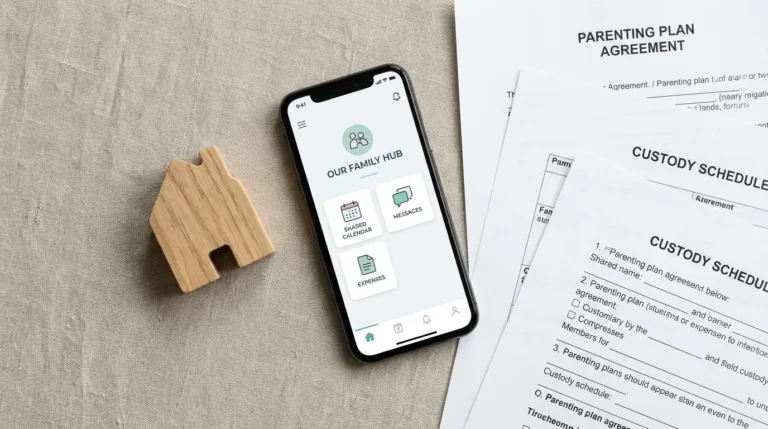
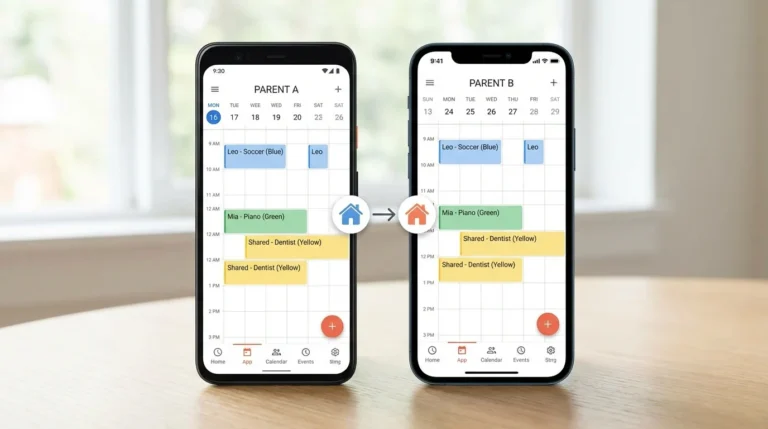
Consider using technology to streamline scheduling. Shared digital calendars, co-parenting apps, and regular check-ins can prevent miscommunications and reduce conflict. OurFamilyWizard offers comprehensive tools designed specifically for co-parents, including shared calendars, expense tracking, and secure messaging.
Establish clear protocols for schedule changes:
- How much notice is required for non-emergency changes?
- How will you handle makeup time if one parent misses their scheduled time?
- Who handles transportation for different activities? Also worth reading: Co Parenting Strategies For Toddlers.
Write these protocols into your divorce parenting plan so both parents have clear expectations.
When Co-Parenting Becomes Difficult
Some co-parenting situations are genuinely challenging. High conflict, unresponsiveness, or unpredictable behavior from your co-parent can make the situation feel impossible.
In these cases:
- Document all communications and agreements.
- Consider parallel parenting (minimizing direct contact while both remain involved).
- Seek professional mediation for disputes you can’t resolve.
- Involve a family therapist to support your children.
- Consult with your attorney about enforcement options if court orders are being violated.
Sometimes arguments about children aren’t really about the children at all—they’re about unresolved issues from your relationship. Work to separate your feelings about the other parent from your feelings about your children. If needed, seek individual therapy to process your emotions so they don’t spill into your co-parenting relationship.
Building a Successful Co-Parenting Plan

What is a Parenting Plan?
A divorce parenting plan is a written document that outlines how you and your co-parent will raise your children after separation or divorce. It can be informal (between the two of you) or formal (incorporated into a court order). Either way, it serves as a roadmap for your co-parenting relationship.
Having a clear parenting plan reduces conflict by setting expectations and providing a reference point when disagreements arise. It demonstrates to your children—and to courts, if involved—that both parents are committed to working together. A co-parenting plan is a useful way to set out care arrangements for your child, your parental responsibilities and the new relationship between you and your child’s other parent raisingchildren.net.au.
Key Components of a Parenting Plan
A comprehensive parenting plan should address:
Living arrangements and schedules: Where will the children live? What is the regular weekly schedule? How will holidays, birthdays, and school breaks be divided? This is essential child custody advice for structuring time.
Decision-making responsibilities: Who makes decisions about education, healthcare, religious upbringing, and extracurricular activities? Will you make these decisions jointly or divide responsibilities?
Communication protocols: How will parents communicate about the children? How will children communicate with each parent when they’re at the other’s home? See also: Co Parenting Tips For Newborns.
Financial responsibilities: Beyond child support, how will you handle expenses like medical costs, school fees, and extracurricular activities?
Dispute resolution: How will you handle disagreements? Will you use mediation before going to court?
Tips for Creating a Flexible Plan
Life changes, and your parenting plan should accommodate that reality. Build in review periods—perhaps annually or when major life changes occur—to reassess and adjust the plan as needed.
Include provisions for common scenarios: what happens if one parent relocates? How will you handle new partners? What if a child’s needs change as they grow? A flexible plan anticipates change while providing stability.
Remember that the best parenting plan is one you’ll actually follow. Don’t create elaborate schedules or rules that neither parent can realistically maintain. Start with what works and adjust as you learn what your family needs.
Frequently Asked Questions

How can I communicate effectively with my co-parent after divorce?
Effective co parenting communication requires a business-like approach. Keep messages focused on your children, use written communication for important matters, and respond within agreed timeframes. Avoid emotional language, personal attacks, or bringing up past relationship issues. Many co-parents find success using dedicated apps or email for communication, which creates a record and helps keep exchanges professional and child-focused.
What are the most common co-parenting challenges and how can I overcome them?
Common co parenting challenges include scheduling conflicts, inconsistent rules between households, communication breakdowns, and unresolved emotional issues between parents. Overcome these by establishing clear written agreements, using shared digital calendars, focusing on your child’s needs rather than your feelings about your ex, and seeking professional help when needed. Remember that consistency and predictability help children adjust to their new family structure.
How do I ensure consistency in rules and routines between two households?
Start by identifying the most important areas for consistency: bedtimes, homework expectations, screen time limits, and discipline approaches for major issues. Schedule a dedicated time to discuss these with your co-parent and document your agreements. Accept that some differences will exist—focus on alignment in areas that significantly impact your child’s well-being, and let go of minor variations that won’t matter long-term.
What should be included in a co-parenting plan?
A comprehensive divorce parenting plan should include living arrangements and custody schedules, decision-making responsibilities for education and healthcare, communication protocols between parents and with children, financial responsibilities beyond basic child support, holiday and vacation schedules, and dispute resolution methods. Include provisions for reviewing and updating the plan as children grow and circumstances change.
How can I protect my children from parental conflict after divorce?
Never speak negatively about your co-parent in front of your children, and don’t use children as messengers between parents. Keep adult conflicts private and handle disputes when children aren’t present. If conflict arises during exchanges, consider neutral drop-off locations or having a third party facilitate transitions. Remember that children who witness parents resolving conflicts calmly learn valuable relationship skills, so model the behavior you want them to learn.