Co-Parenting Holiday Schedule Ideas: Reduce Stress Now
Understanding the Importance of a Co-Parenting Holiday Schedule

The holiday season should be a time of joy, connection, and cherished memories. Yet for separated and divorced parents, this time of year often brings unique challenges. Without a clear plan in place, what should be magical moments can quickly become sources of stress, conflict, and disappointment.
A well-crafted co parenting holiday schedule serves as your family’s roadmap through the season’s celebrations. It eliminates guesswork, reduces tension, and—most importantly—helps your children feel secure during what can otherwise be an uncertain time. Right now, nearly 13 million parents across the country are navigating how to share holiday time with their kids, according to lkrasner.com. The good news? Most families successfully create arrangements that work without needing court intervention; in fact, 9 out of 10 custody arrangements get worked out between parents without going to court lkrasner.com. For more guidance, see Child-Friendly Co-Parenting Tips: Nurturing Stability.
Why a Schedule is Crucial for Co-Parents
When you establish a clear holiday schedule, you’re doing far more than simply dividing days on a calendar. You’re creating a foundation for peaceful celebrations and meaningful traditions in both households. A thoughtful schedule prevents the confusion, last-minute negotiations, and arguments that can overshadow the holidays. This is a core component of successful co parenting after divorce advice.
Without predetermined arrangements, parents may find themselves in uncomfortable situations—like both showing up at a child’s school holiday performance expecting to take the child afterward, or realizing too late that neither parent made reservations for a special holiday dinner. These scenarios create stress not just for parents, but for children who sense the tension.
A comprehensive holiday custody schedule also helps extended family members plan their own gatherings. Grandparents, aunts, uncles, and cousins can make travel plans and host events with confidence when they know which parent will have the children on specific dates lkrasner.com.
How Holiday Schedules Override Regular Parenting Plans
One critical aspect that many co-parents overlook is that holiday schedules take priority over regular residential custody arrangements. A holiday visitation schedule has priority over the standard residential schedule—meaning even if a holiday falls during what would normally be one parent’s regular parenting time, the holiday schedule determines where the child spends that day custodyxchange.com.
Understanding this hierarchy helps prevent confusion. For example, if your regular arrangement gives one parent every weekend, but the holiday schedule assigns Thanksgiving weekend to the other parent, the holiday schedule prevails. This prioritization ensures both parents have opportunities to celebrate special occasions with their children regardless of the regular weekly routine. If you are struggling to formalize these rules, learning how to create a co parenting plan is essential.
The Impact on Children’s Well-being and Stability
Children thrive on predictability and routine. When they know in advance where they’ll be spending each holiday, they can mentally prepare and look forward to celebrations with each parent. This predictability reduces anxiety and helps children feel secure in their relationships with both parents. For younger children, focusing on co parenting strategies for toddlers or even co parenting tips for newborns can help them adapt to these changes smoothly.
Research consistently shows that children fare better when parents maintain low-conflict communication and establish clear expectations. A documented holiday schedule eliminates the need for children to wonder, worry, or choose between parents. Instead, they can focus on what matters most: enjoying the season and creating positive memories.
Popular Co-Parenting Holiday Schedule Models
There’s no single “right” way to divide holiday time between households. The best approach depends on your family’s unique circumstances, including geographic distance, family traditions, religious observances, and the ages of your children. Here are the most common and effective models to consider when planning co parenting holidays.
Alternating Holidays Each Year
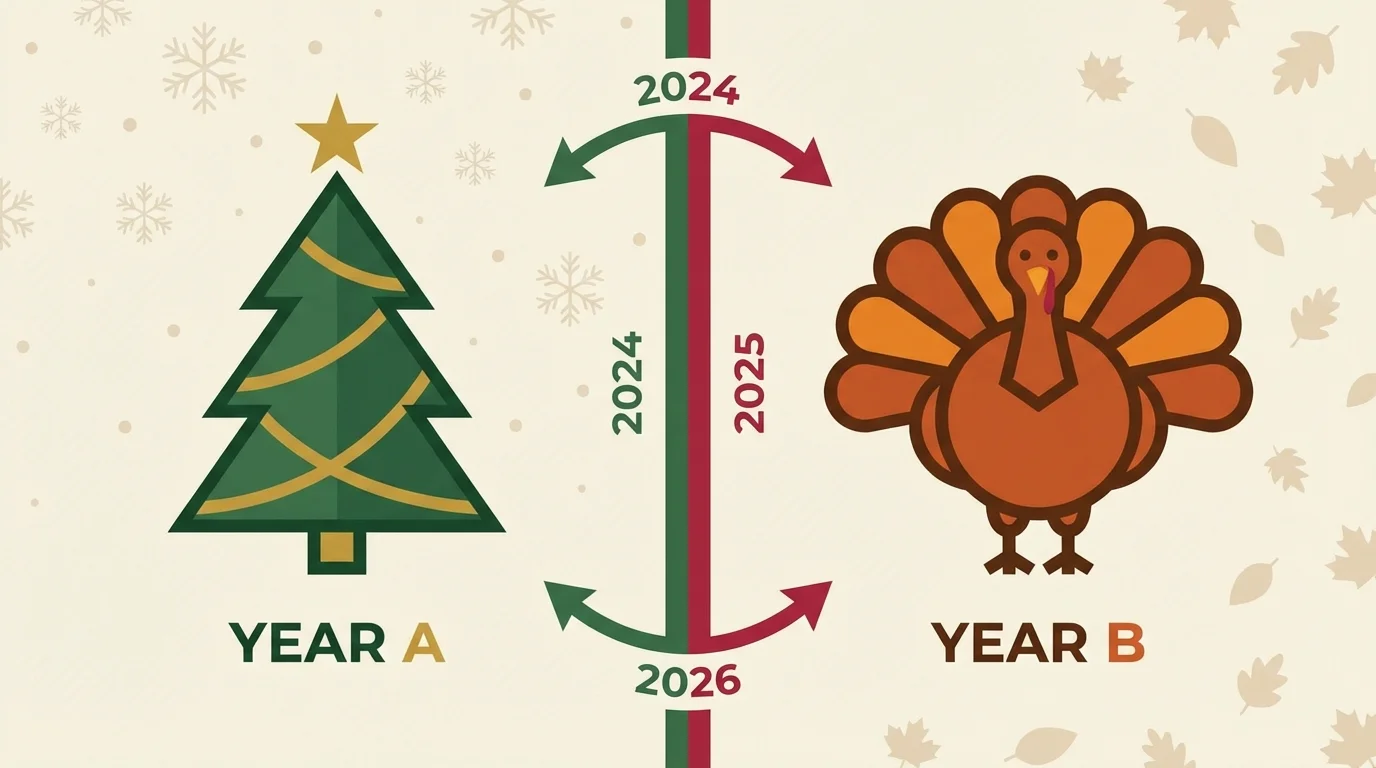
The alternating model ranks among the most popular approaches to holiday sharing. Under this arrangement, parents take turns having specific holidays each year. For instance, one parent might have Thanksgiving co parenting schedule duties in even-numbered years, while the other parent has it in odd-numbered years. The same alternation applies to Christmas, Hanukkah, New Year’s, Easter, and other significant celebrations lkrasner.com.
This model offers several advantages. First, it’s inherently fair—neither parent permanently loses out on any holiday. Second, it allows each parent to develop their own traditions around that holiday during their years. Third, children learn to appreciate that holidays can be celebrated differently in each household. Related reading: Co Parenting Strategies For Toddlers.
However, alternating does mean that each parent will sometimes miss a holiday entirely. Some families address this by alternating Christmas Eve and Christmas Day separately, so each parent gets part of the Christmas celebration annually rather than waiting two years between Christmases with their children.
Splitting Holidays in Half (or Scheduling Twice)
For parents who want to share each holiday every year, splitting the day offers another solution. Under this approach, one parent has the child for the morning and early afternoon, while the other parent has the evening. Alternatively, the child might spend the actual holiday date with one parent and celebrate with the other parent on an adjacent day.
This model ensures neither parent misses a holiday entirely, which can feel particularly important for major celebrations. It also allows children to experience both family’s traditions each year.
The downside? Splitting holidays requires significant coordination and can mean children spend part of their holiday traveling between homes. For families living far apart, this approach may not be practical. Even for nearby parents, the transitions can feel disruptive to children who just want to relax and enjoy the festivities.
Some families solve this by “scheduling the holiday twice”—celebrating Christmas with one parent on December 23rd or 24th, and with the other parent on December 25th. This approach maintains the full-day experience while still sharing the holiday season.
Assigning Fixed Holidays Annually
Rather than alternating or splitting, some families assign specific holidays to each parent on a permanent basis. This works particularly well when parents have different religious backgrounds or when certain holidays hold more significance for one parent than the other.
For example, if one parent’s family has always hosted a large Thanksgiving gathering while the other parent’s family doesn’t emphasize that holiday, permanently assigning Thanksgiving to the first parent makes sense. Meanwhile, the other parent might always have the children for New Year’s or a different celebration that matters more to their family.
This model reduces confusion since the arrangement stays the same each year. Children and extended family members can count on consistent plans without needing to reference a calendar or remember which year belongs to which parent.
The “Quality Over Quantity” Approach
For families with unequal custody arrangements—where one parent has significantly less regular parenting time—the holidays become especially precious. Nearly 40% of divorced families fight about holiday plans every year lkrasner.com, often because both parents want meaningful time during special occasions.
The “quality over quantity” approach prioritizes giving the non-custodial parent uninterrupted, meaningful holiday time rather than dividing holidays with ex partners equally. This might mean the parent with less regular time gets a full weekend in December to celebrate the holidays their way—planning special activities, hosting their own gatherings, or taking a trip with the children. You might also like Co Parenting Tips For Newborns.
This model works well for families where one parent lives farther away or where travel between homes is impractical. It reduces transitions and allows for deeper, more relaxed celebrations rather than rushed, divided experiences.
Key Considerations for Creating Your Holiday Schedule
Once you understand the available models, the next step involves working with your co-parent to create a schedule that fits your family. Several factors deserve careful attention during this process when developing your parenting plan holidays.
Starting the Conversation Early
Timing matters enormously when planning holiday schedules. September and October are ideal months to open the conversation, according to weinbergerlawgroup.com. Starting early gives you adequate time to discuss options, negotiate differences, and finalize plans without the pressure of looming holidays.
Early planning also allows time for extended family members to adjust their own plans. When grandparents know well in advance which parent will have the children for Thanksgiving or Christmas, they can plan gatherings accordingly rather than last-minute scrambling.
If you’re reading this and it’s already November, don’t panic. Even a few weeks of lead time works better than trying to negotiate plans on the holiday itself. The key is starting as soon as possible and maintaining calm, productive communication.
Defining Specific Pick-up and Drop-off Times
Vague agreements create problems. “You’ll drop them off Christmas afternoon” leaves too much room for misinterpretation. Does that mean noon? 2 PM? 6 PM? Without specificity, one parent may be waiting while the other is still finishing Christmas dinner.
Instead, establish exact times and locations for all transitions. A clear agreement might read: “Parent A will drop off the children at Parent B’s home at 3:00 PM on Christmas Day.” This precision eliminates confusion and helps children know what to expect.
Consider also the logistics of transitions. School parking lots, police stations, or other neutral locations sometimes work better than one parent’s home, especially if the relationship is high-conflict. If you struggle with high conflict, learning how to co-parent with a difficult ex can provide valuable strategies.
Addressing Travel and Transportation
Holiday travel introduces additional complexity. If one parent plans to fly with the children to visit extended family, who purchases the tickets? Who holds the passports? What time should the children be at the airport? What happens if a flight is delayed or cancelled?
For long-distance co-parenting, address these details explicitly. Include provisions for:
– Who arranges and pays for travel
– Required documentation and deadlines
– Communication expectations during travel
– Contingency plans for delays or cancellations Also worth reading: Best Co Parenting Apps For Families.
Even for local families, transportation deserves attention. Who drives the children to their other parent? What happens if weather makes roads unsafe? Having these conversations before problems arise prevents panic and conflict later.
Incorporating Flexibility and Contingency Plans
Life happens. Children get sick, flights get cancelled, cars break down. The best holiday schedules acknowledge that unexpected circumstances may require adjustments.
Build flexibility into your agreement by including provisions for:
– How to handle illness (does the holiday get rescheduled, or does the time simply get lost?)
– What happens if travel plans fall through
– How much notice is required for non-emergency changes
– Who can be a neutral third party to help resolve disagreements
Some parents include a “make-up time” clause, ensuring that if one parent misses scheduled time due to circumstances beyond anyone’s control, they receive equivalent time at another date.
Documenting Your Agreement
Verbal agreements work—until they don’t. Memories fade, interpretations differ, and what seemed clear in conversation becomes murky weeks later. Documenting your holiday schedule in writing protects everyone involved.
Your written agreement should include:
– Specific dates and times for each holiday
– Pick-up and drop-off locations
– Transportation responsibilities
– Contact information for emergencies
– Signatures from both parents
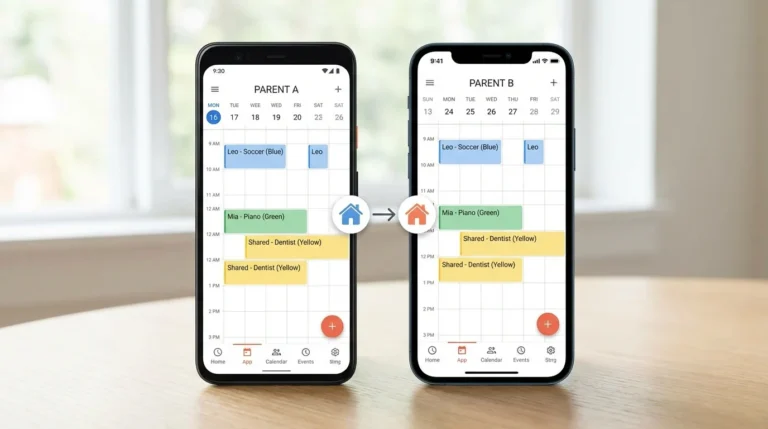
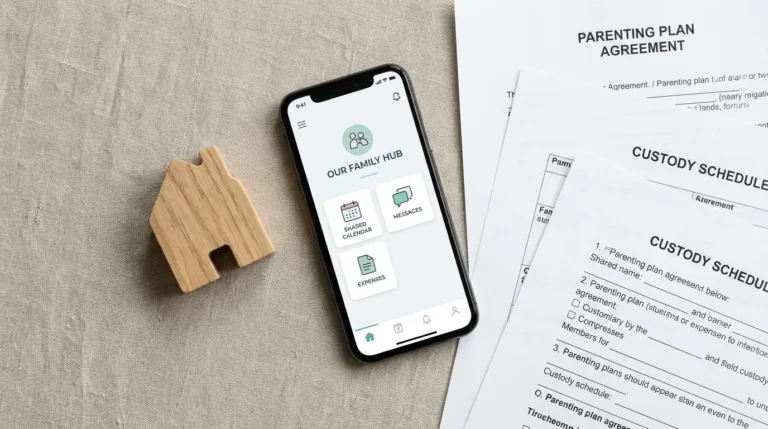
Many parents find it helpful to use a shared calendar or co-parenting app where both can access the schedule and receive reminders. Utilizing dedicated co parenting communication tools can streamline this documentation process significantly.
Special Holiday Scenarios and Creative Solutions

Beyond the major holidays, families must navigate various special occasions throughout the year. Each scenario brings unique considerations when planning your co parenting holiday schedule ideas.
Handling Birthdays and Anniversaries
Children’s birthdays deserve special attention. Some families alternate birthdays each year, while others split the day so each parent can celebrate. Another option: one parent hosts the actual birthday while the other plans a separate celebration on an adjacent day.
Parent birthdays and Mother’s/Father’s Day typically follow simpler rules—children usually spend Mother’s Day with their mother and Father’s Day with their father, regardless of the regular custody schedule. Wedding anniversaries from the former marriage rarely require scheduling, but if the date still feels significant (or painful) for either parent, acknowledging this can help prevent unexpected emotional triggers. See also: Co Parenting For Divorced Parents.
Navigating 3-Day Weekends (MLK Day, Presidents’ Day, etc.)
Three-day weekends offer valuable extended time but often get overlooked in holiday schedules. Common approaches include alternating these weekends each year or assigning specific three-day weekends to each parent.
Consider how these weekends fit with your regular schedule. If one parent typically has weekends, does adding Monday create an unfairly long stretch? Or does it provide a welcome opportunity for a short trip? Discuss these weekends explicitly rather than assuming they’ll follow the regular pattern.
Co-Parenting During School Breaks and Summer Vacation
Winter break, spring break, and summer vacation represent extended periods requiring separate planning. These breaks often follow different rules than single-day holidays.
For winter break, some families split the break in half, with each parent getting approximately two weeks. Others alternate years—one parent has the first half (including christmas co parenting schedule time) in even years, while the other has it in odd years. Spring break often alternates annually, while summer vacation typically involves extended time with each parent.
Tips for Reducing Conflict and Maintaining a Positive Tone
The holidays magnify emotions for everyone involved. As one divorced mother shared, “Any time we approached a new holiday on the other side of the separation, I experienced an immense amount of anxiety and grief around the change of those moments” parents.com.
To maintain peace during the season:
– Focus on your children’s experience rather than your own desires
– Communicate respectfully, even when frustrated
– Avoid putting children in the middle of disagreements
– Be willing to compromise on less important issues
– Remember that perfect fairness may not always be achievable—and that’s okay
– Consider working with a mediator if you cannot reach agreement
The goal isn’t winning the holiday—it’s creating positive memories for your children and modeling healthy conflict resolution. If you find yourself struggling with the emotional toll, exploring steps for emotional healing after trauma might be beneficial.
Frequently Asked Questions

What is the best way to split holidays when co-parenting?
The best approach depends on your family’s specific circumstances. Alternating holidays each year works well for many families because it’s inherently fair and allows each parent to develop their own traditions lkrasner.com. Other families prefer splitting individual holidays or assigning fixed holidays permanently to each parent. Consider factors like geographic distance, family traditions, religious observances, and your children’s ages when choosing your approach.
How do I create a fair holiday schedule for my children?
Start by listing all holidays and special occasions your family celebrates. Then discuss with your co-parent which holidays matter most to each of you. Consider alternating major holidays, splitting important days, or assigning fixed holidays based on family traditions. Write down specific dates, times, and transition locations. Include provisions for travel, illness, and unexpected changes. Focus on what serves your children rather than what feels “equal” on paper. For more general guidance on this topic, review our co parenting for divorced parents guide.
What if my co-parent and I disagree on the holiday schedule?
If direct communication doesn’t resolve the disagreement, consider involving a neutral third party such as a family mediator. Many parents find success by negotiating early and putting agreements in writing weinbergerlawgroup.com. If mediation fails and you have a court-ordered parenting plan, review it for any holiday provisions already in place. As a last resort, you may need to return to court, though research shows 90% of custody arrangements get worked out between parents without judicial intervention lkrasner.com. If your co-parent is particularly challenging, you might benefit from reading about how to co parent with a narcissist.
Can a holiday schedule override a standard parenting plan?
Yes, holiday schedules typically take priority over regular residential custody schedules. This means if a holiday falls during what would normally be one parent’s regular parenting time, the holiday visitation schedule determines where the child spends that day. This prioritization ensures both parents have opportunities to celebrate special occasions regardless of the weekly routine. Your parenting plan should specify this hierarchy to prevent confusion.
How can we ensure our children have a positive experience during holidays with co-parenting?
Children thrive on predictability, so establish clear schedules well in advance. Avoid speaking negatively about your co-parent to or around the children. Let children know it’s okay to enjoy time with both parents. Help them prepare for transitions by discussing plans beforehand. Avoid creating loyalty conflicts or making children feel guilty for enjoying time with their other parent. Focus on creating positive memories and traditions in your household rather than competing with your co-parent. Following child friendly co parenting tips can be invaluable here.