Co Parenting Strategies for Toddlers: Stability & Success

Co Parenting Strategies for Toddlers: A Comprehensive Guide to Stability
Parenting a toddler is a remarkable journey filled with rapid developmental changes and endless moments of discovery. When co parenting strategies for toddlers enter the picture—whether due to separation, divorce, or simply living in separate locations—the complexity increases, but so does the opportunity to create a nurturing environment that supports your child’s growth. With over 400,000 kids under 5 living in Arizona alone, approximately 120,000 young children and families are navigating co-parenting situations in the state, according to 2020 Census data firstthingsfirst.org. This guide provides practical, actionable strategies tailored specifically to the unique developmental stage and needs of toddlers, emphasizing stability and minimizing stress during transitions. For more guidance, see Child-Friendly Co-Parenting Tips: Nurturing Stability.

Establishing Consistent Routines and Schedules

When sharing care between two homes, practical strategies to reduce handover conflict and keep your baby’s routine stable are vital Pebbi | Co-Parenting Baby Care: Practical Guide for Separated Parents (2026). For toddlers, this means establishing routines that feel reliable.
The Importance of Predictability for Toddlers
Toddlers thrive on routine and predictability in ways that may surprise parents. Research from the National Institutes of Health (NIH) shows that consistent routines are linked to better developmental outcomes. Children with regular schedules are more likely to self-regulate, manage emotions, and adapt well to change laidlawfamilylaw.com. This is particularly crucial for toddlers, who are experiencing massive cognitive and emotional growth during these years.
When a toddler knows what to expect—breakfast at a certain time, nap after lunch, bath before bed—they feel secure and confident. This security forms the foundation for healthy emotional development and helps children manage the inevitable stresses of daily life. In co-parenting situations, maintaining co parenting routines for toddlers across both households becomes not just helpful but essential for your child’s well-being.
The key is creating a unified approach where both parents commit to similar schedules, feeding times, and sleep routines. This doesn’t mean identical households, but rather shared principles that your toddler can rely on regardless of which parent they’re with on any given day.
Creating Shared Schedules and Calendars
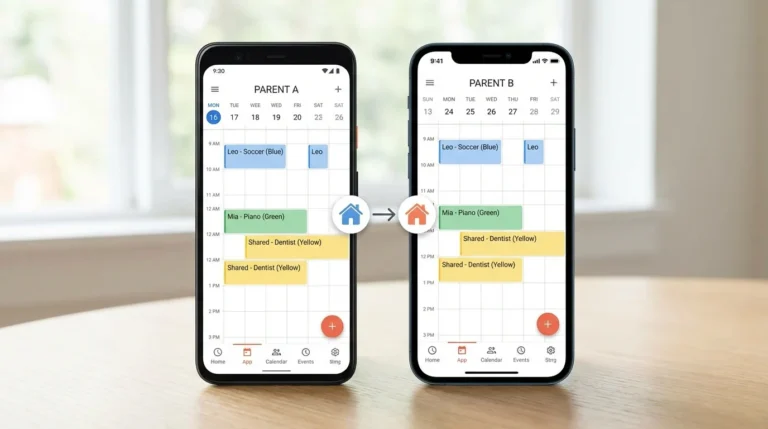
Modern life is busy, and despite best intentions, schedules fill up and frequently change. The best way to handle last-minute changes is to have a strong foundation built on shared planning brighthorizons.com. Creating a shared system or master calendar to track and view each family member’s schedule is one of the most effective co parenting schedules for toddlers.
Consider these practical approaches to building co parenting schedules for toddlers:
Digital shared calendars allow both parents to see upcoming appointments, activities, and custody transitions in real-time. Apps like Google Calendar, Cozi, or specialized co-parenting platforms can be updated instantly and send notifications for changes.
Weekly planning sessions work well for many families. Pick a consistent day each week to confirm the details of the upcoming week and plan for any changes that have emerged. Even a 15-minute check-in can prevent misunderstandings and ensure both parents are prepared.
Documentation of routines goes beyond the calendar. Create a shared document or notebook that outlines daily routines—meal times, nap schedules, bedtime rituals, favorite activities. This living document helps maintain consistency as your toddler grows and their needs evolve.
Parenting schedules for toddlers will change significantly depending on how bonded the toddler is to one or both parents and how that bonding changes with time. The schedule must focus on the toddler’s best interest and bring predictability and consistency farzadlaw.com. Related reading: Co Parenting Tips For Newborns.
Managing Handover Transitions Smoothly
Transitions between homes can be one of the most stressful aspects of co-parenting for toddlers. The most important thing to keep in mind when making a custody schedule for a toddler is that they need frequent visits with each parent, but they may also have difficulty with handling transitions co parenting toddlers. It’s best to keep the custody schedule as consistent as possible, while allowing both parents to see the toddler every two to three days talkingparents.com.
Drop-offs and transitions can be a great way to build positive associations with both parents. Instead of picking your child up from their co-parent’s house, consider having that parent drop them off instead. This subtle adjustment can make a huge difference in your child’s perspective. “This creates a common ground between both parents,” explains Katherine Willard, senior director for Family Support and Literacy at First Things First. “If I’m dropping off, and he’s dropping off, it’s never ‘I’m going to pick up and take them away’ from any activity” firstthingsfirst.org.
When meeting at a neutral location is necessary, parents can still use the “drop off” approach. One parent can walk the child to the other parent, creating a gentle transition rather than an abrupt handoff.
Effective Communication and Conflict Resolution

Co-parenting requires ongoing communication, and when children are toddlers, the stakes feel even higher because your child cannot articulate complex needs or navigate adult conflicts on their own. It’s usually best for children if co-parenting arrangements keep both parents involved in a child’s life raisingchildren.net.au.

Prioritizing Clear and Concise Communication
Effective toddler co parenting communication isn’t about having lengthy emotional conversations—it’s about sharing factual information efficiently. Focus on what’s relevant to your toddler’s daily life: health updates, developmental milestones, behavioral observations, and schedule changes. Sharing baby care data automatically reduces the “interrogation dynamic” at every handover Pebbi | Co-Parenting Baby Care: Practical Guide for Separated Parents (2026).
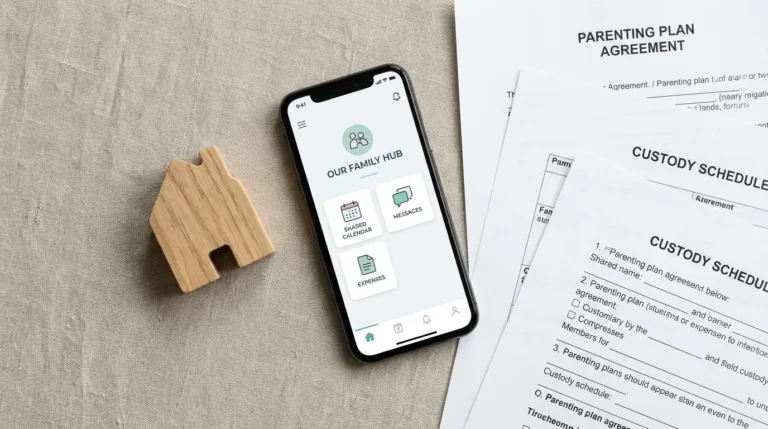
Shared communication tools can transform how co-parents interact. Platforms designed specifically for co-parenting help keep communications focused, organized, and when necessary, admissible in court proceedings. If you are navigating separation, learning about co parenting communication tools can be highly beneficial. These tools create a clear record of agreements and discussions, reducing the potential for misunderstandings.
Establishing a communication protocol is crucial. This means deciding together:
- Preferred methods of communication (app, text, email)
- Appropriate times to contact each other
- What constitutes an emergency requiring immediate contact
- How quickly each parent should respond to non-urgent messages
When it comes to co-parenting, respect, negotiation, communication and mutual support are your best allies. Successful co-parenting is all about finding harmony in situations you can’t always control childrenswi.org.
Strategies for Managing Disagreements
Even the most amicable co-parents will experience disagreements. The key is having strategies in place to manage co parenting conflict resolution toddlers constructively before they escalate.
Pause and reflect before responding to something that triggers anger or frustration. Take time to consider whether the issue truly impacts your toddler’s well-being or is more about your own feelings toward your ex-partner. If you are finding high levels of tension, learning how to co-parent with difficult ex partners might offer useful perspective.
Focus on the child, not the history. When disagreements arise, ask yourself: “What would be best for our toddler right now?” This simple question can redirect energy from adult conflicts to child-focused solutions. You might also like Best Co Parenting Apps For Families.
Document agreements in writing. Whether you use a co-parenting app or simply exchange text messages, putting agreements in writing creates accountability and reference points for future discussions.
Know when to compromise. Not every issue warrants holding firm. Being flexible on minor matters preserves energy and goodwill for addressing more important topics.
Keeping Children Out of Parental Conflicts
Perhaps the most critical rule in co-parenting: never put your child in the middle. Research consistently shows that conflict between co-parents after a divorce or separation can make it much harder for children to cope verywellmind.com.
This means avoiding:
- Negative talk about the other parent in front of your toddler
- Using your child as a messenger between households
- Asking your toddler about the other parent’s personal life
- Displaying frustration or anger during handover moments
Modeling a cooperative, mutually respectful relationship can help improve your child’s long-term development. Children learn from what they observe, and when they see their parents working together despite living apart, they develop healthier models for relationships themselves. For those navigating separation, understanding the basics of co parenting after divorce advice is foundational.
Supporting Toddler Development and Well-being
A well-structured parenting plan not only promotes stability and consistency for toddlers but also establishes a foundation of cooperation between parents happlawgroup.com. This section explores how to support your toddler’s emotional security, consistent discipline, and overall sense of stability through effective co parenting strategies for toddlers.

Co-Parenting for Emotional Security
Toddlers are constantly forming attachments and learning about relationships. They need to feel loved and secure in both households, which requires intentional effort from both parents. This focus on security supports supporting toddler emotional development co parenting.
Maintain familiar objects that travel between homes. A favorite stuffed animal, blanket, or book provides comfort during transitions and helps your toddler feel connected to the other parent when apart.
Honor the other parent positively. When your toddler asks about “Mommy” or “Daddy,” respond with warmth and respect. Avoid projecting your own feelings onto your child.
Create rituals specific to each household that your toddler can anticipate and enjoy. Perhaps Saturday mornings have a particular tradition with one parent, while Sunday afternoons involve different activities with the other. These rituals become part of your child’s identity and sense of belonging.
Validate feelings about transitions. It’s normal for toddlers to have mixed emotions about moving between homes. Rather than dismissing these feelings or rushing to fix them, acknowledge them: “I know it’s hard to say goodbye to Daddy. Let’s snuggle for a minute before I drive.” Also worth reading: Co Parenting For Divorced Parents.
Consistent Discipline Approaches
Aligning on discipline co parenting toddlers strategies is essential but challenging. Both parents must agree on core rules and consequences, even if individual parenting styles differ in minor ways.
Establish non-negotiable boundaries together. These might include safety rules (no hitting, staying seated in the car) that apply everywhere, regardless of which parent is supervising.
Discuss consequence approaches and strive for consistency. If one parent uses time-outs while another prefers natural consequences, discuss which approaches work and whether you can unify your methods.
Avoid undermining each other’s authority. If your toddler learns that “Dad always says yes” or “Mom lets me,” they’ll quickly exploit these differences. A united front, even when privately you disagree, protects your child’s sense of security.
Focus on positive reinforcement whenever possible. Toddlers respond far better to praise for desired behavior than punishment for unwanted behavior. Celebrate successes together, whether they’re using words instead of tantrums or sharing toys.
Fostering a Sense of Stability Across Two Homes
Stability doesn’t mean identical homes—it means reliable, predictable environments where your toddler feels safe.
Maintain similar daily structures even if specific activities differ. Both households should have regular mealtimes, nap times, and bedtimes. This consistency helps toddlers regulate their internal clocks and emotional states.
Coordinate on significant matters including healthcare decisions, educational approaches, and dietary guidelines. When major decisions require input from both parents, approach them as partners in your child’s upbringing.
Keep transitions calm by maintaining low-key handover routines. The few minutes of transition between parents set the emotional tone for your toddler’s entire experience. A calm, loving handoff teaches your child that change is manageable.
Practical Tools and Resources for Co-Parenting Success

Leveraging technology and professional support can dramatically improve co-parenting effectiveness. Here are tools and approaches that help families thrive, supporting all aspects of co parenting strategies for toddlers.
 See also: How To Create A Co Parenting Plan.
Leveraging Technology for Co-Parenting
Several categories of tools support successful co-parenting:
Shared calendar apps keep everyone informed about schedules, appointments, and custody transitions. Look for features that allow recurring events, easy modifications, and notification systems. If you are looking for specific recommendations, check out guides on the best co parenting apps for families.
Communication platforms designed for co-parenting keep exchanges focused and documented. Some offer features like expense tracking, message translation, and even court-admissible records. Tools that share baby care data automatically reduce the “interrogation dynamic” at every handover Pebbi | Co-Parenting Baby Care: Practical Guide for Separated Parents (2026).
Photo and memory sharing allows both parents to stay connected to daily moments. Seeing what your toddler did during their time with the other parent builds trust and shared experience. Coloring pages can also help ease transitions and support consistent routines MyColoringPages.ai.
Document storage for medical records, school information, and important agreements ensures both parents have access to critical information.
Seeking Professional Support
Sometimes co-parenting challenges benefit from professional intervention. Mediation can help parents work through custody arrangements and disagreements with a neutral third party. Family therapy provides a space to address emotional challenges that arise from co-parenting dynamics. Individual therapy can help parents process their own feelings about the separation, which ultimately benefits their co-parenting relationship. Over 70% of parents report improved communication after mediation sessions MyColoringPages.ai.
There’s no shame in seeking support. Many successful co-parenting relationships involve some form of professional guidance, particularly during transitions or when new challenges emerge. If you are struggling to set boundaries or manage tension, seeking help is a positive step toward better co parenting conflict resolution toddlers helpguide.org.
Activities to Ease Transitions
Practical activities can transform handover moments from stressful to smooth:
Transition objects provide comfort. A small toy or item that travels between homes creates continuity.
Picture books about co-parenting help toddlers understand their family situation in age-appropriate ways. For more ideas focused on the child’s perspective, look into child friendly co parenting tips.
Quick routines during handovers—like a special song, a squeeze goodbye, or a wave from the car window—create positive associations with transitions.
Patience and presence matter most. Rushing transitions increases toddler anxiety. Arriving a few minutes early and allowing extra time creates space for emotional processing.
Frequently Asked Questions About Co Parenting Toddlers
How can I ensure my toddler has a consistent bedtime routine across two homes?
Consistency starts with collaboration. Both parents should discuss and agree on core bedtime elements: approximate time, pre-bed activities (bath, story, song). Create a shared document outlining the routine that both parents follow, making only minor adjustments based on individual household preferences. The key is maintaining the same sequence and general timing so your toddler knows what to expect regardless of which home they’re in. If you are starting from scratch, learning how to create a co parenting plan is a great first step.
What are the best ways to communicate with my co-parent about our toddler’s needs without conflict?
Focus on factual, child-centered communication using established tools and protocols. Choose a co-parenting app or messaging system designed to keep exchanges concise and documented. Establish clear boundaries around communication timing—perhaps limiting discussions to certain hours or reserving weekends for longer planning sessions. When conflicts arise, pause and revisit the conversation later, always returning to the question: “What’s best for our toddler right now?”
How do I handle discipline consistently when my toddler spends time with both parents?
Start with non-negotiable rules that both parents enforce identically across households. Discuss discipline approaches openly and agree on core principles, even if individual styles differ slightly. Avoid undermining each other’s authority—if one parent makes a decision, the other should support it rather than contradicting. Focus heavily on positive reinforcement and redirection, which work better than punishment for toddlers. When significant behavioral issues arise, communicate directly and develop a unified response strategy.
What strategies can help my toddler adjust to transitions between homes?
Keep transitions as calm and predictable as possible by maintaining consistent handover times and locations. Create simple, repeatable rituals around transitions—a special goodbye song, a favorite comfort item, or a few minutes of cuddling before departure. Communicate positively about the other parent and the upcoming transition (“You’re going to have so much fun with Daddy!”). Allow extra time for transitions rather than rushing, and acknowledge your toddler’s feelings about moving between homes without minimizing or overreacting to them.