How to Create a Co-Parenting Plan That Works for Your Family

If you are navigating separation or divorce while sharing children, learning how to create a co-parenting plan is one of the most crucial steps you will take. This document acts as the blueprint for your family’s future structure. For more guidance, see Co-Parenting After Divorce Advice: Building a Team for Your Kids.
Understanding the Purpose and Importance of a Co-Parenting Plan

What is a Co-Parenting Plan?

A co-parenting plan is a written agreement that outlines precisely how separated or divorced parents will share custody, responsibilities, and decision-making authority for their children. A parenting plan template helps structure this agreement, setting expectations for both parties while keeping the child’s needs central divorce.com. According to Legal Templates, this document details custody, visitation, and support arrangements to help separated or divorced parents prioritize their child’s needs while maintaining clear expectations for both parties legaltemplates.net.
This document serves as a roadmap for your family’s new normal, establishing clear guidelines and expectations for everyone involved in the family structure following a separation or divorce ourfamilywizard.com. The plan typically addresses several critical areas: where the child will live, how parenting time will be divided between parents, how major decisions regarding the child’s education, healthcare, and extracurricular activities will be made, and how holidays and special occasions will be handled. At Divorce.com, approximately 42% of their customers report having minor children, meaning nearly half of all divorces involve the creation of a parenting plan divorce.com.
Why is a Co-Parenting Plan Essential?
The importance of a well-structured co-parenting plan cannot be overstated. Research from Oxford University Press indicates that effective parenting plans should prioritize the child’s well-being and connections with both parents while minimizing conflict ourfamilywizard.com. Furthermore, a parenting plan must be in the best interests of the child, not solely what the parents desire family.cplea.ca.
The clearer and more specific your plan is, the fewer disputes you’ll face down the road. Most courts expect a clear, detailed outline of how you and your co-parent will share responsibilities, divide parenting time, and make decisions about your children’s lives divorce.com. This document provides essential stability for children during what can be a challenging transition period, reducing uncertainty and helping them understand what to expect from their daily routine. For foundational advice on navigating this new reality, review our guide on co-parenting after divorce advice.
Legal vs. Practical Aspects of a Parenting Plan
It’s crucial to understand the distinction between the legal and practical dimensions of a co-parenting plan. Once a judge approves your plan, it becomes legally binding, and both you and your co-parent must adhere to it ourfamilywizard.com. This legal enforceability means that if one parent violates the terms of the plan, the other parent can seek legal remedies through the court system.
However, a parenting plan is more than just a legal document. It also serves as a practical guide for daily co-parenting life. The best co-parenting plan is mutually agreed upon by both parents and outlines how parents will communicate, share expenses beyond court-mandated child support, and make major and minor decisions about children’s education, extracurricular activities, and healthcare centhq.com. This practical guidance helps parents navigate the complexities of post-divorce parenting while keeping the child’s best interests at the forefront. Related reading: Child-Friendly Co-Parenting Tips: Nurturing Stability.
Key Components of a Comprehensive Co-Parenting Plan

To successfully learn how to create a co-parenting plan, you must address several core areas that govern your child’s life.
Physical Custody and Schedule Arrangements

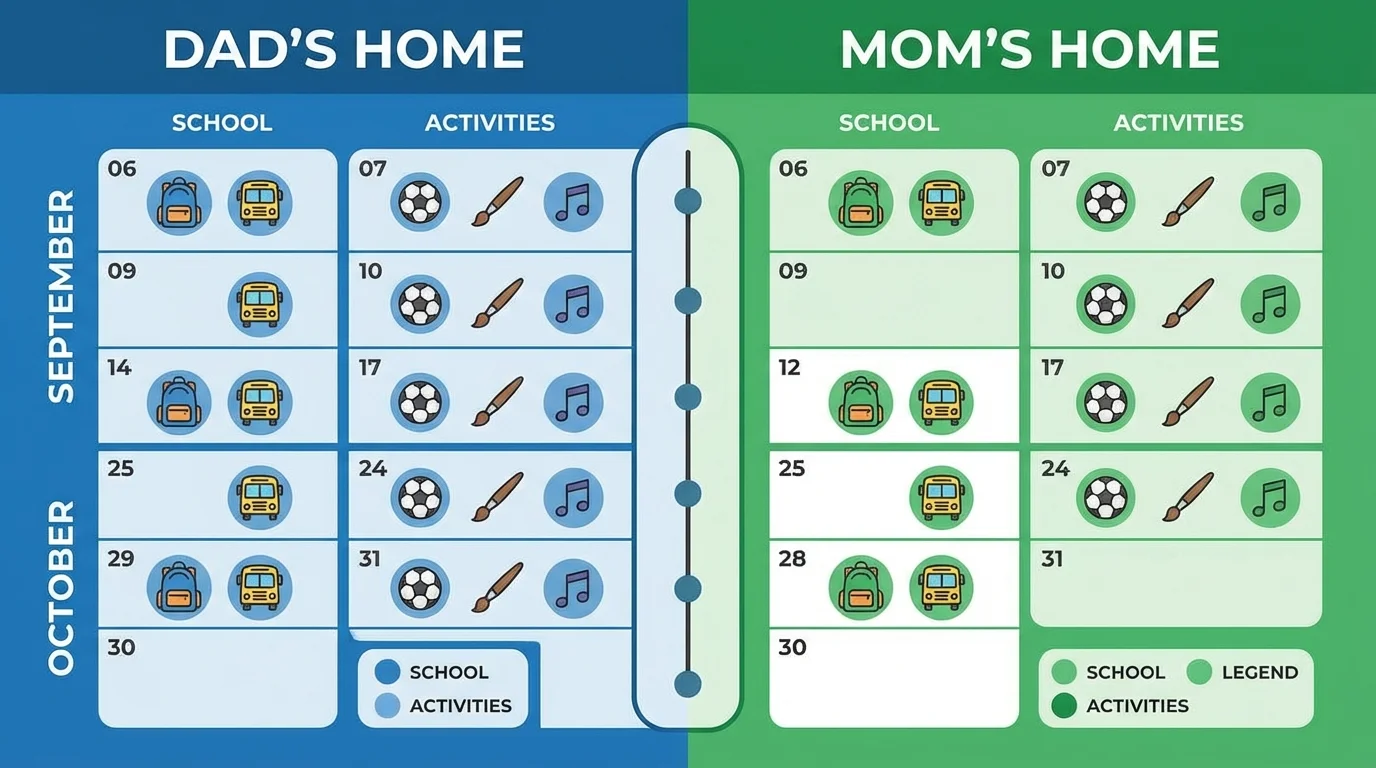
Physical custody determines where the child resides and forms the foundation of your co-parenting schedule. According to Custody X Change, parents will either share joint physical custody somewhat evenly, or one parent will have sole physical custody with the other having significantly less time with the child custodyxchange.com. Your plan must describe your schedule clearly in legal terms, and you can also create a calendar and attach it to your plan to show specific months or years in detail.
When establishing physical custody arrangements, consider your child’s daily routine, school location, extracurricular activities, and each parent’s work schedule. The goal is to create a schedule that provides stability while allowing both parents meaningful time with their children. Some families opt for a week-on-week-off arrangement, while others prefer a 2-2-3 schedule where children spend two days with one parent, two days with the other, and then alternate weekends. This detailed approach helps define the co-parenting schedule effectively.
Legal Custody and Decision-Making Authority
Legal custody refers to the authority to make important decisions about your child’s life, including education, healthcare, religious upbringing, and extracurricular activities. Your plan must designate whether one parent will have sole legal custody or if parents will share joint legal custody custodyxchange.com. This determines who holds the authority to make decisions for and about your child. Understanding the difference between legal custody vs physical custody is vital here.
When creating decision-making provisions, be specific about how parents will handle different types of decisions. Some plans give each parent sole decision-making authority in certain areas—for example, one parent might handle educational decisions while the other handles healthcare decisions. Other plans require parents to make major decisions jointly. Whatever approach you choose, clearly outline the process to avoid future disagreements regarding major life choices.
Holiday and Vacation Schedules
Holiday and vacation schedules require special attention in any co-parenting plan. These arrangements often cause the most conflict between co-parents, so being explicit about expectations is essential. Your plan should specify where your child will spend holidays so there’s no last-minute disagreement about Christmas Eve or Thanksgiving divorce.com. You might also like Co Parenting Strategies For Toddlers.
Consider alternating major holidays between parents each year, splitting holidays (such as spending Christmas morning with one parent and Christmas afternoon with the other), and establishing clear rules for school breaks and summer vacation. Include provisions for how far in advance parents must communicate their vacation plans and whether the child can travel with either parent during designated times. If you need inspiration for dividing time, explore our ideas for co-parenting holiday schedule ideas.
Communication Protocols and Dispute Resolution
Effective communication between co-parents is vital for successful post-divorce co-parenting, and your plan should establish clear protocols for how parents will interact. Information about exchanges in your plan helps your schedule run smoothly—you need to decide where and how exchanges will take place custodyxchange.com.
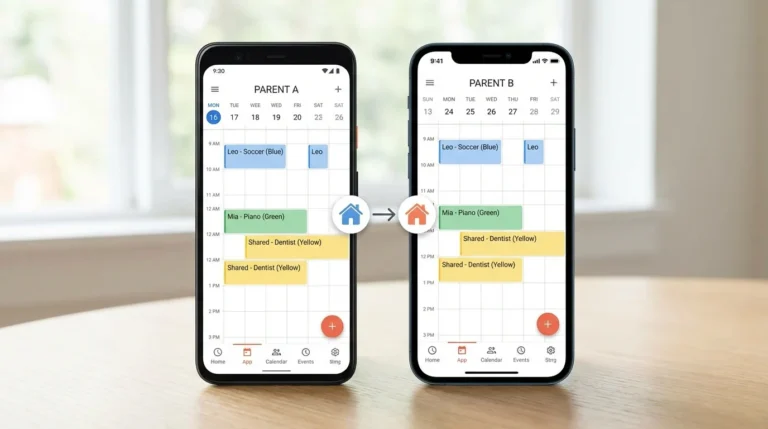
Your plan can also explain how the parents will communicate about schedule changes and rescheduling parenting time. Many co-parents find it helpful to use co-parenting apps that provide a documented communication trail and help keep all scheduling information in one place. For more on this, check out our guide on the best co parenting apps for families. Additionally, include a dispute resolution mechanism that outlines how parents will handle disagreements without immediately resorting to court. Mediation clauses can be particularly valuable, allowing parents to work through conflicts with a neutral third party before seeking legal intervention.
Developing and Implementing Your Co-Parenting Plan
Gathering Necessary Information and Resources

Before drafting your co-parenting plan, gather all necessary information and resources. Parenting plans may be developed by parents, their attorneys, or with the help of a mediator custodyxchange.com. Consider using a parenting plan template to help organize your thoughts and ensure you don’t overlook important details. Many online resources provide free templates that can serve as a starting point for your discussions.
You should also familiarize yourself with your state’s specific requirements, as custody laws vary by jurisdiction. Some states have mandatory forms that must be used, while others allow more flexibility in how divorce parenting plan documents are structured. Consulting with a family law attorney can help you understand the specific requirements in your area and ensure your plan meets legal standards.
Drafting the Plan: Tips and Considerations
When drafting your co-parenting plan, prioritize child-focused language and specific details. Avoid vague provisions that could lead to interpretation disputes later. Instead of saying “reasonable visitation,” specify exact days and times. Rather than “the parents will share decision-making,” clearly outline which decisions require joint agreement and which can be made independently. Also worth reading: Co Parenting Tips For Newborns.
The best co-parenting plans address both major issues (where the child will live, which school they will attend) and minor but important details (how homework will be completed, what time the child should be in bed on school nights). Remember that a well-structured template helps support routines and expectations for children, makes agreements easier for Courts to review, and reduces misunderstandings between parents soberlink.com.
Reviewing and Finalizing the Agreement
Once you’ve drafted your initial plan, review it carefully and consider negotiation tactics if disagreements arise. If you and your co-parent struggle to reach agreement on certain issues, seeking mediation can be an effective way to resolve conflicts without the expense and stress of court proceedings. A mediator can help facilitate productive discussions and guide you toward compromises that serve your child’s best interests.
After reaching agreement, carefully review the final document before submission to the court. Ensure all provisions are clearly written and enforceable, and verify that the schedule works practically for both parents and, most importantly, serves your child’s needs. This final review is key to creating a lasting child custody agreement.
Modifying and Updating the Plan Over Time
Life circumstances change, and your parenting plan should be flexible enough to accommodate these changes. Build in regular review periods—such as annually or when significant life changes occur—to assess whether the current arrangements still work for your family.
When modifications are needed, try to work with your co-parent to reach agreement on changes rather than returning to court. However, if significant changes are required and co-parents cannot agree, the court system provides mechanisms for modifying parenting plans based on changed circumstances.
Addressing Common Challenges and Special Circumstances

Co-Parenting with Difficult Personalities

Co-parenting with a difficult ex-partner requires patience, clear boundaries, and effective communication strategies. Focus on maintaining consistency in your parenting approach and document all communications thoroughly. Using co-parenting apps can help minimize direct contact while ensuring important information is shared, which is crucial for successful post-divorce co-parenting. If you suspect your ex exhibits high-conflict behaviors, review guidance on how to co-parent with a difficult ex. See also: Best Co Parenting Apps For Families.
Safety Concerns and High-Conflict Situations
When safety concerns exist, the court may order supervised visitation or other restrictions. Your parenting plan should include provisions for how these situations will be handled, including specific procedures for supervised exchanges and clear guidelines about what circumstances warrant seeking court intervention.
Plans for Special Needs Children
Children with disabilities often require more detailed planning to address their unique needs. Consider including provisions for specialized medical care, therapy schedules, educational accommodations, and contingency plans for emergencies. This level of detail ensures their specific requirements are met consistently across both households. For younger children, specific guidance on co-parenting strategies for toddlers or even co-parenting tips for newborns might be necessary depending on the child’s age.
Relocation and Long-Distance Co-Parenting
When parents live far apart, creating a plan that accommodates geographic distance becomes essential. This may involve longer blocks of time with each parent during school breaks, virtual communication schedules, and clear provisions for how transportation costs and logistics will be handled. This is often a necessary component when defining the co-parenting schedule across state lines.
Frequently Asked Questions

What are the essential elements every co-parenting plan should include?
Every comprehensive co-parenting plan should include physical custody arrangements specifying where the child will live and the parenting time schedule, legal custody provisions outlining decision-making authority for education, healthcare, and religious matters, holiday and vacation schedules that detail how special occasions will be divided, communication protocols for how parents will share information and coordinate schedules, and dispute resolution mechanisms outlining how disagreements will be handled. The plan should also address transportation arrangements, child support agreement details, and provisions for modifying the agreement as circumstances change.
How do I create a co-parenting schedule that is fair to both parents and beneficial for the child?
Creating a fair and beneficial co-parenting schedule starts with considering your child’s needs above all else. Look at your child’s school schedule, extracurricular activities, and daily routines when designing the arrangement. Consider each parent’s work schedule and ability to provide care during specific times. The best schedules provide consistency and stability while allowing both parents meaningful time with their children. Be willing to compromise and recognize that “fair” doesn’t always mean “equal”—what matters most is what works for your specific family dynamic. When focusing on the child’s perspective, review our advice on child friendly co parenting tips.
What steps should I take if my co-parent is not following the parenting plan?
If your co-parent violates the parenting plan, document the violations thoroughly, including dates, times, and details of each incident. First, attempt to communicate directly about the issue and try to resolve it cooperatively. If direct communication fails, consider using a mediator to help negotiate a resolution. If the violations continue and significantly impact your child’s well-being or your parental rights, you may need to file a motion with the court to enforce the existing order or seek modifications. The court can impose consequences for repeated violations, including modifying custody arrangements.
Can a co-parenting plan be modified after it’s been finalized?
Yes, co-parenting plans can be modified after finalization, though the process depends on the circumstances. Minor changes that both parents agree to can often be handled informally through a written agreement filed with the court. Significant modifications typically require demonstrating a material change in circumstances—such as a parent relocating, changes in the child’s needs, or one parent’s inability to comply with the current arrangement. The court must approve any modifications to ensure they serve the child’s best interests. It’s advisable to work with your co-parent to reach agreement on changes whenever possible, as this is typically less costly and stressful than court proceedings.
Disclaimer: This article provides general information about creating a co-parenting plan and is not a substitute for professional legal advice. Custody laws vary significantly by jurisdiction. Consult with a qualified family law attorney in your area for guidance specific to your situation.