How to Find Your Life Purpose: A Step-by-Step Guide to Meaningful Living
Understanding What Life Purpose Means

Many people spend years searching for their life purpose, believing it’s a single, hidden destination they must uncover. But purpose isn’t a treasure buried somewhere waiting to be found. It’s something you cultivate through self-awareness, action, and intention. Understanding how to find your life purpose is the crucial first step toward discovering your own meaningful direction.
Defining Life Purpose
At its core, a life purpose is your central motivating aim—the reason you get up in the morning. It’s the guiding principle that shapes your decisions, actions, and goals. According to Dr. Chris Mosunic from Calm, “Purpose is the invisible compass that guides us through life, leading us to fulfillment and meaning.” This compass doesn’t point to a single destination but helps you navigate life’s journey with intention and clarity. For more guidance, see Steps To Discover Your Life Purpose.
The Japanese concept of ikigai beautifully captures this idea. Ikigai represents the intersection of four elements: what you love, what you’re good at, what the world needs, and what you can be paid for. When these elements align, you experience a profound sense of meaning and direction. Your purpose doesn’t have to be grand or world-changing—it simply needs to feel authentic and meaningful to you.
Why Purpose Matters for Well-being and Fulfillment
Having a clear sense of purpose isn’t just philosophically satisfying—it delivers tangible benefits for your mental and physical health. Research tracking adults over time found that purpose predicts lower risk of early mortality and better long-term well-being lifepurposeapp.com. Furthermore, studies suggest that purpose is tied to having better health, longevity, and even economic success greatergood.berkeley.edu.
A study from Harvard University’s Human Flourishing Program reveals that people with a strong sense of purpose experience sharper memory and thinking skills, better mood control, reduced risks of chronic disease and disability, and even increased longevity. The researchers suggest that purpose acts as a buffer against stress—people with purpose tend to perceive stressors as less difficult and cope more effectively with challenges health.harvard.edu.
Beyond the science, purpose simply makes life richer. It transforms mundane routines into meaningful rituals and gives context to your daily efforts. When you know why you’re doing something, even difficult tasks become more bearable.
The Difference Between Purpose and Happiness
It’s easy to confuse purpose with happiness, but they’re fundamentally different concepts. Happiness is a fleeting emotion—a momentary state of joy or contentment. Purpose, by contrast, is about usefulness and contribution. It’s not always comfortable or pleasurable in the moment, yet it provides a deeper, more sustainable form of satisfaction.
Consider a parent sacrificing sleep to care for a sick child, or a volunteer working long hours for a cause they believe in. These activities may not generate immediate happiness, but they create profound meaning. Purpose asks not “What feels good?” but “What matters?” It connects you to something larger than yourself and often involves service to others, which is a key component of a meaningful life findyourlifepurpose.org.
This distinction matters because chasing happiness alone can leave you feeling empty. When you shift your focus toward contribution and meaning, you build a foundation for lasting life fulfillment that weathers life’s inevitable difficulties. Related reading: How To Find Your True Self.
Practical Steps to Discover Your Life Purpose

Learning how to find your life purpose doesn’t require a dramatic revelation. It’s a systematic process of self-discovery, experimentation, and refinement. The following four-step approach will help you move from confusion to clarity and begin to discover your purpose.
Step 1: Reflect on Your Values, Strengths, and Interests
The journey to discovering your purpose starts with introspection. As purpose coach Joshua M. Evans explains, “The journey to discovering your purpose starts with introspection. Ask yourself what truly excites you, what causes or activities make you feel alive.” This self-examination involves three key areas: your values, your strengths, and your interests.
Your core values are the principles that matter most to you—things like creativity, justice, family, or independence. To clarify values, examine moments when you felt deeply satisfied or profoundly frustrated. Both emotions reveal what you care about. If injustice makes you furious, fairness may be a core value. If you light up when solving complex problems, intellectual challenge might be essential to your personal growth.
Your strengths are the skills and abilities that come naturally to you. Ask friends, family, and colleagues what they see as your greatest assets. Their perspectives often reveal talents you take for granted. Maybe you’re exceptionally good at explaining difficult concepts, or perhaps you have a gift for making people feel heard and understood.
Your interests show up in how you spend your free time, what books you read, what podcasts you follow, and what topics dominate your conversations. Pay attention to activities where time seems to disappear—these “flow states” often contain clues to your passion and purpose.
Step 2: Clarify Your Insights into a Purpose Statement
Once you’ve gathered insights about your values, strengths, and interests, it’s time to synthesize them into a clear purpose statement. This isn’t a permanent declaration—it’s a working hypothesis you can refine over time.
An effective purpose statement is concise, action-oriented, and specific enough to guide daily decisions. Rather than “I want to help people,” try something like “I use my listening skills and emotional intelligence to help people navigate difficult life transitions.” The second statement identifies what you do, how you do it, and who you serve. You might also like How to Reconnect With Yourself: A Guide to Self-Discovery.
Start by drafting several versions. Don’t worry about perfection. Write statements that feel authentic and energizing, then test them against your daily experience. Does this statement resonate when you read it aloud? Does it excite you or feel like an obligation? Your emotional response provides valuable feedback about whether you’re on the right track.
Remember that your purpose statement can evolve. What feels true today might shift as you grow and experience new things. The goal isn’t to craft a perfect sentence but to articulate a direction that feels meaningful right now lifepurposeapp.com.
Step 3: Experiment and Test Your Potential Purpose
A purpose statement remains abstract until you test it in the real world. Harvard Business Review suggests taking concrete steps to sort out what your overarching intention in life should be through experimentation and action.
Design low-risk experiments to explore different aspects of your potential purpose. If you think your purpose involves teaching, volunteer to tutor students or lead a workshop at work. If you suspect it involves environmental advocacy, join a local conservation group for a weekend cleanup. These experiments let you sample potential purposes without major life changes.
After each experiment, reflect on your experience. Did you feel energized or drained? Did time move quickly or drag? What aspects felt natural, and which felt forced? This feedback helps you refine your understanding of what truly motivates you.
Don’t expect instant clarity. Sometimes an experiment reveals that a path isn’t right for you—that’s valuable information too. Each test, whether successful or not, brings you closer to understanding your authentic purpose. For those navigating major life shifts, like divorce, understanding your purpose can be a key part of building resilience after emotional setbacks.
Step 4: Align Daily Choices with Your Purpose
Discovering your purpose is only the beginning. The real work lies in aligning your daily choices with that purpose. This doesn’t mean every activity must directly serve your purpose, but your overall trajectory should point in that direction. Also worth reading: Questions To Understand Your Values.
Start by examining your current routines. Where do you spend your time, energy, and attention? Identify one or two small changes that would bring your daily life closer to your purpose. This might mean dedicating thirty minutes each morning to a passion and purpose project, or seeking out conversations with people who share your interests.
When faced with decisions, ask yourself which option better serves your purpose. This simple question can guide choices about your career, relationships, hobbies, and even how you spend your weekends. Over time, these small alignments accumulate into a life that feels coherent and meaningful.
Remember that alignment doesn’t require perfection. Some days will feel disconnected from your purpose. What matters is the overall pattern—whether your life is moving in a direction that reflects your values and aspirations. If you are going through a separation, understanding your purpose can be vital when you begin the process of how to start emotional healing journey.
Strategies for Cultivating a Purposeful Life
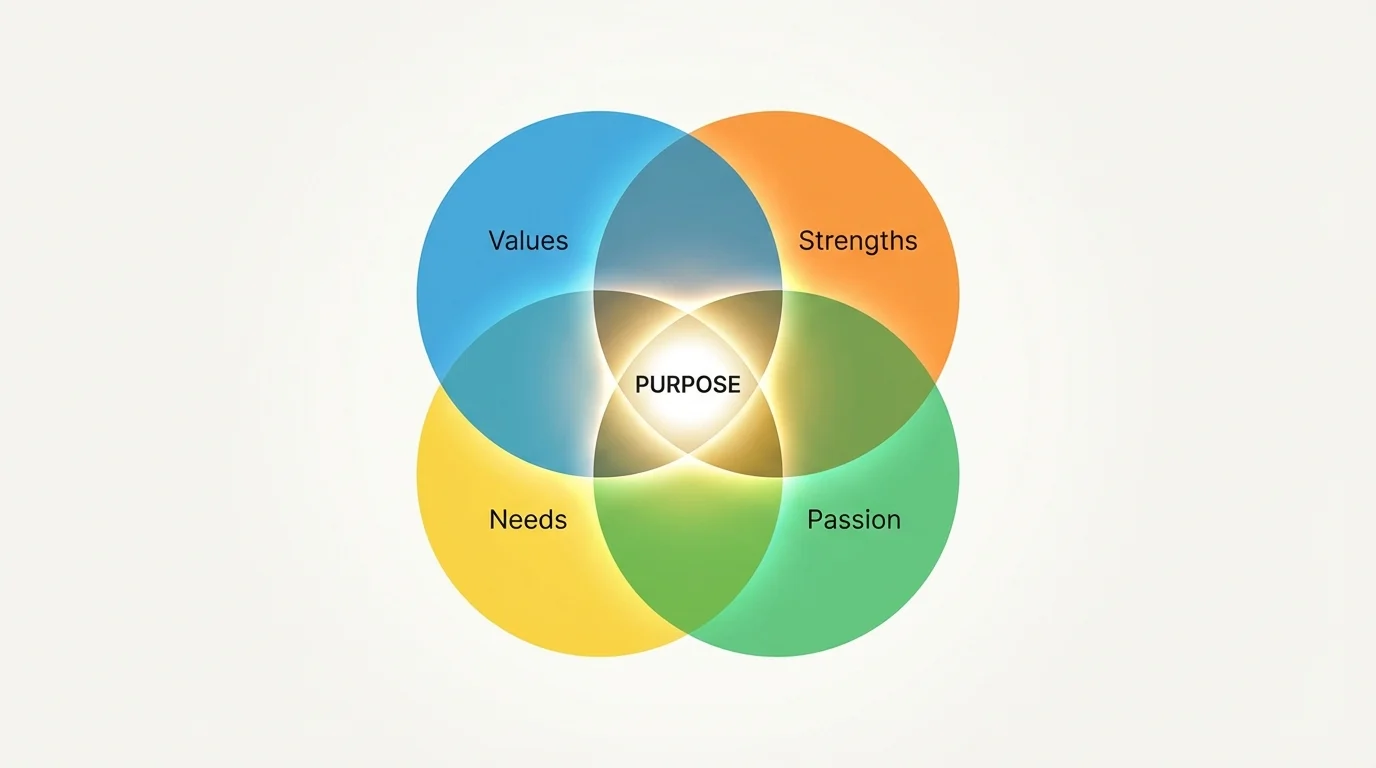
Beyond the core steps of discovering your purpose, certain strategies can help you deepen and sustain a purposeful life. These approaches work whether you’re just beginning your journey or seeking to refine an existing sense of purpose.
Leveraging External Feedback and New Connections
Sometimes we’re too close to our own lives to see our purpose clearly. External feedback from trusted friends, family members, or mentors can reveal patterns and strengths we overlook. Ask people who know you well what they see as your unique contributions and when they’ve seen you most alive and engaged.
New connections also play a vital role. Engaging with people outside your usual circles exposes you to different perspectives, opportunities, and ideas. A casual conversation at a community event might spark an interest you never knew you had. A collaboration with someone from a different field could reveal unexpected applications for your skills. Furthermore, engaging with new people and listening to their stories can help you see your own life through a new lens verywellmind.com.
Exploring Interests and Passions
Your interests and passions are windows into your purpose. Give yourself permission to explore activities that capture your curiosity, even if they don’t immediately seem practical or purposeful. The hobby you start for fun might eventually become a calling, or it might teach you something essential about yourself. See also: Solo Travel After Divorce.
Pay attention to what you naturally gravitate toward when you have free time. Do you find yourself reading about history, gardening, psychology, or technology? These patterns reveal where your intrinsic motivation lies. Following these threads, wherever they lead, often uncovers important elements of your purpose. If you are trying to rediscover yourself after divorce in your 30s, exploring these passions is a crucial step.
Contributing to Something Larger Than Yourself
Purpose rarely exists in isolation. Most people find the deepest meaning when their purpose connects to something beyond their individual concerns—whether that’s their family, community, a cause, or humanity at large. According to BetterUp’s research on life purpose, finding your purpose involves exploring passions, values, and strengths to create a fulfilling and meaningful existence that often includes contributing to others.
This contribution doesn’t have to be grand. Small acts of service—helping a neighbor, mentoring a colleague, supporting a local organization—can provide profound meaning. The key is shifting your focus from “What can I get?” to “What can I give?” This focus on contribution is what separates true purpose from mere self-interest findyourlifepurpose.org.
Navigating Challenges and Transitions
Major life changes often trigger questions about purpose. Job loss, retirement, divorce, or the death of a loved one can shake your sense of identity and meaning. During these transitions, it’s normal to feel lost or uncertain about your purpose.
Remember that purpose evolves throughout life. What felt meaningful in your twenties might not resonate in your fifties. Transitions, while painful, offer opportunities to reassess and realign. The skills and insights you’ve gained through life experience become resources for discovering a new chapter of purpose. If you are dealing with the aftermath of a separation, understanding your purpose can be a key part of finding your true self after divorce.
Be patient with yourself during these periods. Purpose isn’t something you figure out once and keep forever. It’s a living relationship with meaning that deepens and transforms as you grow.
Frequently Asked Questions
What is life purpose and why is it important?
A life purpose is your central motivating aim—the fundamental reason that guides your decisions and gives meaning to your existence. It’s important because research consistently shows that having a sense of purpose improves mental health, reduces anxiety and depression, enhances cognitive function, and even increases longevity. Beyond the measurable benefits, purpose simply makes life more fulfilling by connecting your daily actions to something that matters deeply to you.
How can I identify my core values and strengths to find my purpose?
Identifying your core values requires honest self-reflection about what matters most to you. Examine moments of deep satisfaction and frustration—both reveal your values. For strengths, ask trusted friends and colleagues what they see as your greatest assets, since others often recognize our talents before we do. You can also notice which activities come easily to you and which skills you’ve developed without conscious effort.
What are some practical ways to test or experiment with a potential life purpose?
Testing a potential purpose involves low-risk experiments that let you sample different paths. Volunteer in areas related to your interest, take a class, start a small side project, or shadow someone doing work that appeals to you. After each experiment, reflect on whether you felt energized or drained, whether time passed quickly, and what aspects felt most natural. This feedback helps you refine your understanding lifepurposeapp.com.
Is it normal to not know your life purpose, and how can I deal with that feeling?
Absolutely. Most people experience periods of uncertainty about their purpose, especially during life transitions. This uncertainty, while uncomfortable, often signals growth and opens space for new discoveries. Rather than pressuring yourself to find answers immediately, embrace the exploration process. Focus on taking small actions aligned with your current interests and values, and trust that clarity will emerge over time. For those struggling with this uncertainty, exploring journal prompts for self discovery can be a helpful starting point.
Can my life purpose change over time?
Yes, and this is completely normal. Your purpose evolves as you grow, learn, and experience new things. The purpose that drove you in your twenties might differ from what feels meaningful in your forties or sixties. Life transitions, new relationships, health changes, and shifting priorities all influence your sense of purpose. Viewing purpose as dynamic rather than fixed allows you to adapt and find meaning throughout life’s various chapters.