Signs You Are Losing Yourself: Recognizing & Reclaiming Identity

Understanding the Concept of Losing Yourself
What Does ‘Losing Yourself’ Mean?
 For more guidance, see How to Reconnect With Yourself: A Guide to Self-Discovery.
The phrase “losing yourself” might sound like a poetic metaphor, but it describes a genuine psychological phenomenon that affects countless people. At its core, signs you are losing yourself means becoming disconnected from your authentic identity—your values, desires, preferences, and sense of purpose. When you’re experiencing this disconnection, you may find that the person looking back at you in the mirror feels like a stranger thedreamcatch.com.
Self-abandonment is a cycle of pushing away your own needs, wants, feelings, and values, usually in favor of others’ needs. This pattern negatively impacts relationships and mental health, and when it becomes chronic, it can lead to significant mental health challenges that affect your overall quality of life.
The signs you are losing yourself often emerge so quietly that you might not notice them until you’re deep in the experience. You might wake up one day and realize you can’t remember the last time you made a decision based purely on what you wanted, rather than what was expected of you.
The Gradual Nature of Disconnection
This process rarely happens overnight. Instead, it unfolds through countless small moments—saying “yes” when you mean “no,” staying quiet when you disagree, or gradually letting go of activities that once sparked joy. The gradual nature of this disconnection makes it particularly insidious because there’s rarely a clear “before and after” moment to point to.
Major life transitions such as moving, relationship changes, or career shifts can trigger identity crises and accelerate this drift away from yourself. The daily grind, mounting responsibilities, and pressure to meet external expectations slowly erode your connection to your inner world. As one source notes, life is a cycle where we shed old layers, and the moments between layers can feel messy, like you’re fading or losing your center thedreamcatch.com.
Emotional weariness often accompanies this gradual fading. You might feel tired—not the kind that sleep fixes, but a deeper exhaustion that comes from constantly performing a version of yourself that doesn’t quite fit. This weariness is your mind and body signaling that something fundamental has shifted.
Common triggers include overworking without boundaries, chronic people-pleasing, and overidentifying with specific roles like “the reliable one,” “the achiever,” or “the caretaker.” When your identity becomes entirely wrapped up in what you do for others or how you perform in certain contexts, you lose touch with who you are underneath those roles. Having a strong sense of self means being able to separate others’ opinions from what you believe about yourself, which becomes difficult when roles take over e-counseling.com.
Key Signs You Are Losing Your Sense of Self

Neglecting Your Passions and Hobbies
One of the most telling signs of losing identity is the gradual abandonment of activities and interests that once brought you genuine happiness. You might find yourself making excuses for why you don’t have time for your art, your sport, or your creative projects anymore. The guitar gathers dust in the corner. The hiking boots stay in the back of the closet. The books pile up unread. Related reading: Finding Yourself After Divorce.
This isn’t simply about being busy—it’s about a fundamental shift in what feels meaningful. Neglecting passions for things you previously valued is a sign of diminished self-worth and identity loss. When you no longer make space for the activities that light you up, you’re telling yourself that your joy doesn’t matter. If you are navigating a major life change like divorce, learning [finding passions after divorce] can be a vital step in reclaiming joy.
Perhaps more telling is when you can’t even remember what you used to enjoy. If someone asked you about your hobbies and you draw a blank, or if you find yourself transforming your preferences based on who you’re with, these are red flags. According to The Dream Catcher, this chameleon-like behavior—changing yourself to match whoever you’re around—indicates you’ve lost touch with your authentic preferences.
Feeling Disconnected from Emotions and Values
The experience of feeling disconnected from yourself often manifests as emotional numbness or confusion about what you actually feel. You might struggle to answer simple questions like “What do you want for dinner?” or “How do you feel about this situation?” because you genuinely don’t know.
This disconnection extends to your values—the principles that once guided your decisions. You might find yourself making choices that contradict what you believe in, or you may have become so disconnected that you can’t articulate what your values even are anymore. If you are struggling to articulate what matters most, exploring [questions to discover your values] can help anchor you.
Difficulty making decisions and second-guessing yourself indicates disconnection from your authentic self. When you’ve lost touch with your inner compass, every choice feels overwhelming because you have no internal anchor to guide you.
This emotional detachment can feel like watching your life from the outside. You’re going through the motions, checking boxes, and meeting obligations, but there’s a hollow quality to it all. The richness of experience fades when you’re not fully present in your own life.
Absence of Enthusiasm and Joy
Remember the last time you felt genuinely excited about something? If you’re struggling to recall, this absence of enthusiasm may be one of the identity crisis signs worth paying attention to.
This isn’t about clinical depression (though the two can overlap). It’s about a specific kind of flatness—a grey quality to days that used to have color. You might still experience fleeting moments of pleasure, but the deep satisfaction that comes from living in alignment with your true self is missing. You might also like Steps To Discover Your Life Purpose.
People describing this state often say they feel “numb” or “empty.” Life looks fine from the outside—maybe even good by objective measures—but internally, something essential is absent. This joylessness is exhausting, creating a cycle where the less connected you feel, the harder it becomes to engage with anything that might reignite that spark.
Compromising Your Core Beliefs
When you’re losing your sense of self, you may find yourself agreeing to things that violate your core beliefs or saying “yes” when every fiber of your being wants to say “no.” This compromise happens gradually—small concessions that seem insignificant in the moment but accumulate over time.
If you’ve been struggling with listening to your gut, defining your standards and values, and sticking with your plans and beliefs, it may be because you’ve lost touch with yourself so much that you rely on others to validate your every move. This external validation-seeking becomes a substitute for internal knowing.
You might notice this pattern in relationships, where you compromise your needs to maintain harmony. For instance, if you’ve stopped watching your favorite show or quit a food you love simply because your partner dislikes it, you may be slowly losing yourself in that relationship. If you are dealing with a difficult ex, learning [how to co-parent with difficult ex] might help you set better boundaries in that specific area.
This compromise often stems from a fear of rejection or conflict. You tell yourself it’s not a big deal, that relationships require compromise. But when the compromise is always one-sided—when you’re consistently the one bending—your sense of self erodes. Furthermore, constantly putting yourself down after mistakes, believing phrases like “I’m not good enough,” chips away at self-esteem ideapod.com.
Living on Autopilot or Overidentifying with Roles
Living on autopilot means moving through your days without conscious intention. You wake up, go through your routine, complete your tasks, and go to bed, but there’s no sense of agency or choice. You’re doing what you’ve always done because that’s what you do—not because it aligns with who you are or want to be.
Related to this is the tendency to overidentify with specific roles. You might be “the responsible one,” “the peacemaker,” “the achiever,” or “the caretaker.” While these roles aren’t inherently problematic, trouble arises when they become your entire identity. When someone asks who you are beyond your job, your relationships, or your family role, and you can’t answer, that’s a sign of identity loss. If you are going through a divorce, focusing on [how to rebuild identity after divorce] is crucial to avoid letting roles define you entirely.
These constraints box you into a version of yourself that may have served a purpose at some point but now feels like a prison. People describing this state often say they feel “numb” or “empty.” Life looks fine from the outside—maybe even good by objective measures—but internally, something essential is absent. This joylessness is exhausting, creating a cycle where the less connected you feel, the harder it becomes to engage with anything that might reignite that spark. Also worth reading: Questions To Understand Your Values.
Actionable Steps to Reconnect with Your True Self

Prioritize Self-Reflection and Mindfulness
Reconnecting with yourself begins with creating intentional space for self-reflection. This doesn’t require hours of meditation—though that can be valuable—but it does mean setting aside regular time to check in with yourself. Ask: What am I feeling right now? What do I actually want in this situation? Does this choice align with my values?
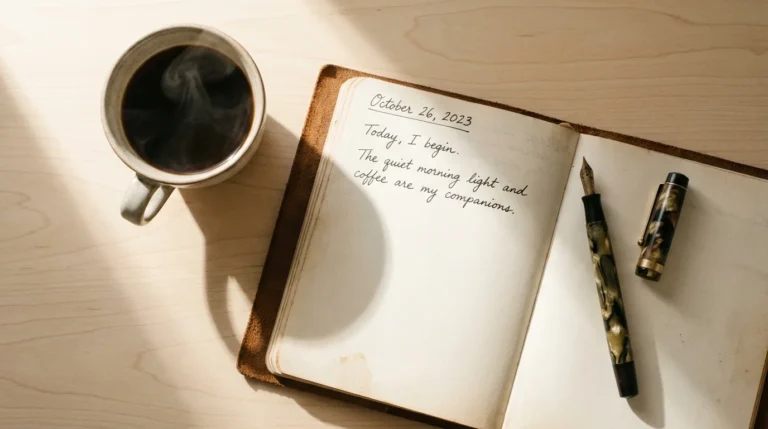
Journaling can be particularly powerful for this process. Writing without an agenda allows thoughts and feelings to surface that might otherwise stay buried. Over time, patterns emerge that reveal your authentic preferences and values. If you need structure for this, exploring [journal prompts for self discovery] can be a great starting point.
Mindfulness practices help you tune into your internal signals. When you’re constantly distracted by phones, notifications, and busyness, you can’t hear your own inner voice. Even five minutes of quiet attention to your breath and body can begin rebuilding that connection. This awareness is the first step toward change thedreamcatch.com.
Re-engage with Past Passions
Think back to activities that once brought you genuine joy—not because they were productive or impressive, but simply because you loved them. What were they? When did you stop? Why?
Re-engaging doesn’t mean you have to return to something exactly as it was. Maybe you used to paint but now the idea of setting up a canvas feels overwhelming. Could you start with a small sketchbook? The goal is to reconnect with the feeling of doing something purely for pleasure.
Schedule these activities into your calendar like you would any important appointment. Treat your joy as non-negotiable. This sends a message to yourself that your happiness matters—that you matter. Reconnecting with hobbies that used to bring you joy is a crucial step in reversing the signs you are losing yourself maplewoodcounseling.com. If you are divorced, learning [how to start emotional healing journey] often involves rediscovering these lost interests.
Set Boundaries and Reclaim Your Time
Boundaries are essential for protecting your sense of self. They define where you end and others begin—what you will and won’t accept, how much you’re willing to give, and what you need to preserve your wellbeing.
Start small. Practice saying “no” to requests that drain you or conflict with your needs. Notice how it feels to protect your time and energy. It might be uncomfortable at first, especially if you’re accustomed to people-pleasing, but this discomfort is part of reclaiming yourself. See also: Solo Travel After Divorce.
Reclaiming your time also means being intentional about how you spend it. Audit your schedule: What obligations no longer serve you? Where are you spending time out of habit rather than choice? Small shifts—declining a commitment, protecting an evening for yourself—create space for your authentic self to emerge.
Seek Feedback and Support
Sometimes we can’t see ourselves clearly. Trusted friends or family members might notice changes in us before we do. Ask people who know you well: “Have you noticed me seeming different lately? Do I seem like myself?”
Professional support can be invaluable in this process. Therapists are trained to help people navigate identity issues and can provide tools and perspectives that accelerate reconnection. They offer a safe space to explore who you are beneath the layers of expectation and adaptation. If you are seeking professional guidance, looking into [life coach for divorce recovery] might provide targeted support.
Support groups or communities focused on personal growth can also provide validation and ideas. Knowing others are on similar journeys reduces isolation and offers practical strategies.
Realign with Your Values
Your values are your internal compass—the principles that guide meaningful decisions. When you’ve lost yourself, you’ve likely also lost touch with what matters most to you.
Identifying your core values requires honest reflection. What do you believe in? What qualities do you admire in others? What would you want to be remembered for? Common values include authenticity, compassion, creativity, freedom, growth, and connection—but your values are uniquely yours.
Once identified, use your values as a filter for decisions. When faced with a choice, ask: Does this align with what I truly value? This simple question can cut through confusion and help you make choices that honor your authentic self. If you are navigating divorce, understanding your values is key to [building new identity after divorce].
Remember that reconnecting with yourself is a process, not a destination. Grief and major life changes can shatter your inner compass and cause you to feel unrecognizable to yourself. Be patient with yourself as you navigate this journey back to wholeness.
Frequently Asked Questions


What are the most common reasons people lose themselves?
People typically lose themselves through a combination of external pressures and internal patterns. Common causes include chronic people-pleasing, overidentification with roles like parent or professional, major life transitions, toxic relationships, and accumulated stress. Many people develop a “false self” early in life to gain approval or stay safe, then lose touch with their authentic needs and desires over time.
How can I tell if my feelings of disconnection are serious?
Feelings of disconnection become concerning when they persist for weeks or months, interfere with daily functioning, or are accompanied by symptoms like persistent sadness, anxiety, or hopelessness. If you’re questioning who you are, feeling numb or empty despite positive circumstances, or struggling to make even small decisions, these signs of losing identity warrant attention. Professional support can help determine the underlying causes and appropriate next steps.
What’s the difference between an identity crisis and simply changing as a person?
Healthy personal growth involves expanding who you are—adding new dimensions while maintaining a core sense of self. An identity crisis, by contrast, involves losing that core sense of who you are. Growth feels expansive and often exciting, even when challenging. An identity crisis feels disorienting, empty, and often frightening. The key difference is whether you feel grounded in some sense of self, even as you evolve.
Can trauma cause someone to lose their sense of self?
Yes, trauma can significantly disrupt your sense of self. Traumatic experiences can shatter your understanding of who you are, your place in the world, and what you believe about yourself and others. This is particularly true for complex or relational trauma that occurs over time. Many trauma survivors describe feeling like strangers to themselves. Trauma-informed therapy can be essential for rebuilding a coherent sense of identity after such experiences.